


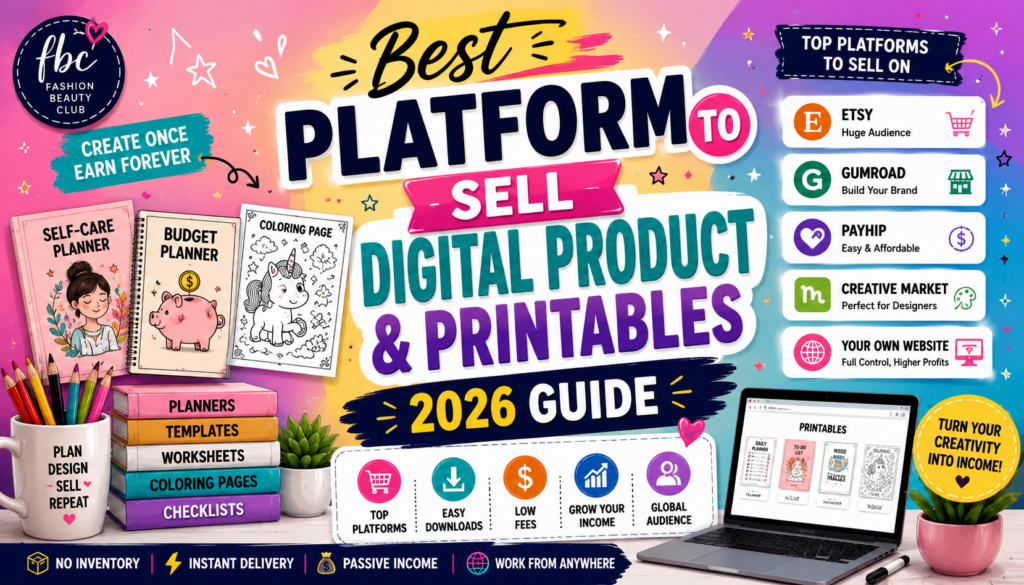
Quick Summary: Best Platforms at a Glance
If you want to sell printables, coloring pages, and digital products in 2026, the best choice depends on your business goals:
Etsy: Best for beginners looking for built-in customer traffic and instant market exposure.
Your Own Website: The ultimate winner for maximum profit margins, custom branding, and long-term SEO benefits.
Gumroad and Payhip: Best for creators who want low transaction fees and direct email list ownership.
Creative Market: Best for professional designers selling premium Canva templates and aesthetic graphics.
Imagine waking up, checking your phone, and seeing a notification that someone purchased your digital planner or lifestyle tracker while you were sleeping.
The digital product industry is booming in 2026. From mindfulness coloring sheets to aesthetic Canva templates, creators are building highly profitable online businesses without worrying about shipping, inventory, or storage. The biggest challenge is not creating the product. It is choosing the right platform to sell it.
In this guide, we will break down the top platforms to turn your digital creativity into consistent passive income.
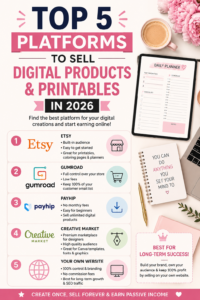

Why Digital Products Are Booming in 2026
Digital products are one of the easiest and lowest-risk ways to launch an online business. You invest your time to create the file once and sell it an unlimited number of times.
For fashion, beauty, and lifestyle creators, the demand for instant-download tools is higher than ever. Top-selling products include:
- Adult coloring pages including mindfulness, fashion illustrations, and aesthetic designs
- Printable planners including self-care journals, fitness trackers, and budget sheets
- Canva templates including Instagram layouts, media kits, and business cards
- Digital lookbooks and style guides
1. Etsy – The Marketplace with Built-In Buyers
If you are brand new to selling printables, Etsy is the most practical place to start. Millions of active shoppers visit Etsy daily looking specifically for unique downloads and printable products.
Best For: Single coloring pages, printable trackers, and event stationery.
Pros:
- Huge built-in audience
- Easy store setup
- No need for a large marketing budget
Cons:
- High competition
- Listing fees for each product
Strategy:
Treat Etsy like a busy shopping mall. Optimize product titles and descriptions with targeted keywords to improve visibility.
2. Gumroad – Best for Creative Freedom
Gumroad is ideal for creators who want complete control over their storefront and customer relationships. Instead of relying on marketplace traffic, you can drive visitors directly to your products.
Best For: Coloring book bundles, premium Canva templates, and ebooks.
Pros:
- Simple checkout process
- Easy file delivery
- Direct access to customer email lists
Cons:
- You need to generate your own traffic
3. Payhip – Ultra Beginner Friendly
Payhip has become a favorite among independent creators because of its simplicity and low startup costs. You can create a professional storefront in minutes.
Best For: Workbooks, printable packs, and lifestyle guides.
Pros:
- No monthly fees on the free plan
- Unlimited products
- Easy setup
Cons:
- Requires external traffic sources for growth
4. Creative Market – Premium Designer Space
If your products focus on high-end design, branding, or advanced graphic templates, Creative Market is an excellent platform.
Best For: Social media templates, fonts, graphic assets, and vector designs.
Pros:
- Premium audience
- Higher pricing potential
- Strong design-focused marketplace
Cons:
- More selective approval process
5. Your Own Website – The Ultimate Long-Term Winner
Nothing beats selling directly from your own website. Whether you use WordPress, Shopify, or another ecommerce solution, owning your platform gives you complete control.
Pros:
- Full control over branding
- No marketplace commissions
- Direct customer relationships
- Better long-term business value
SEO Advantage
By publishing high-quality blog content related to your niche, you can attract organic search traffic and promote your digital products naturally.
For example, a blog post about skincare planning can include a downloadable skincare tracker for readers to purchase.
2026 Platform Comparison Matrix
| Platform | Best For | Traffic Source | Key Benefit |
|---|---|---|---|
| Etsy | Individual printables | Built-in search | Immediate buyer access |
| Gumroad | Ebooks and bundles | External traffic | Email list ownership |
| Payhip | Budget-friendly beginners | Pinterest and blogs | No monthly fee |
| Your Website | Long-term growth | SEO and Google Search | Full control and higher profits |
Frequently Asked Questions
1. Which platform is best for beginners?
Etsy is the best platform for beginners because it offers built-in customer traffic. You do not need an existing audience to start making sales.
2. Can I sell Canva templates on my own website?
Yes. You can sell Canva templates on your website by delivering a PDF containing the template link after purchase.
3. How can I drive traffic without Etsy?
Pinterest, SEO blogging, and Instagram Reels are some of the most effective ways to attract visitors to your digital products.
4. Is selling digital downloads profitable in 2026?
Yes. Digital downloads remain highly profitable because there are no manufacturing, shipping, or inventory costs. Once created, a product can be sold repeatedly with minimal ongoing expenses.
Conclusion
Starting a digital download business has never been easier. Whether you choose Etsy for its built-in audience or your own website for long-term growth, the key is to start. Your first product does not need to be perfect. It simply needs to be published.
Choose a platform, upload your first product, and take the first step toward building your digital business today.